

Consulting on a Natural Dye Garden for the RHS Chelsea Flower Show 2026

In the summer of 2025, we were contacted by Lucy Lewis, lecturer in the horticultural department at Sparsholt College and one of the garden designers for their 2026 RHS Chelsea Flower Show garden. They had decided to create a natural dye garden and were looking for guidance on what to grow.
We were, of course, more than delighted.
After a preliminary meeting in January, it became clear that Lucy had already compiled an extensive list of natural dye plants. Our role was to consult on which plants were not only historically significant but also reliable, lightfast and washfast natural dyes — something that is often overlooked in online discussions of natural colour.
Why Reliability Matters in a Natural Dye Garden

Image: Madder | Weld | Indigo
It’s easy to find instructions online using red cabbage, turmeric or other kitchen dyes that produce instantly vibrant colour. The results can be stunning — and they can also fade disappointingly fast.
When planning a natural dye garden for the RHS Chelsea Flower Show, credibility matters. The plants selected must represent the time-tested core palette of European natural dyeing — those that have been used successfully for centuries.
Nature provides us with three dependable primary colours:
-
Madder (Rubia tinctorum) — red
-
Weld (Reseda luteola) — yellow
-
Indigo (Indigofera tinctoria) and woad (Isatis tinctoria) — blue
From these, an extraordinary range of secondary colours can be achieved through overdyeing and modifying.
Sparsholt College had already begun propagating many of the plants in their greenhouse — and, somewhat impressively, their weld is thriving far better than ours has managed in recent years.
A Natural Dyeing Workshop at Sparsholt College

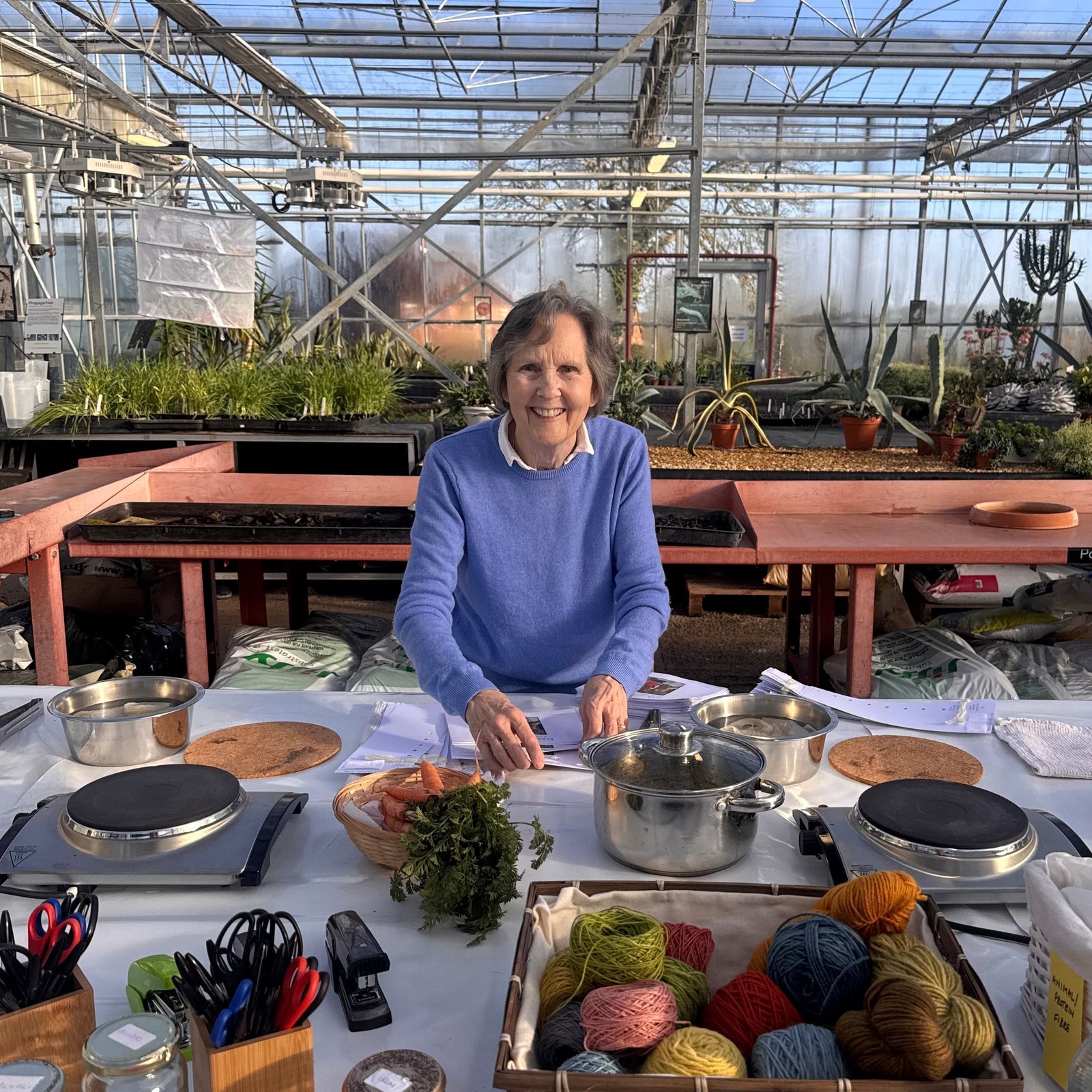
On Monday, we returned to Sparsholt to facilitate a natural dyeing workshop for their horticultural students.
I say “we”, but this was very much Claudia’s domain. As Elka Textile's natural dyer (and a retired teacher) she led the session, while I took on the role of not-so-glamorous assistant.
Claudia usually teaches a maximum of four people over six hours. This session was twenty students in two hours.
It required planning.
The workshop took place in Sparsholt College’s propagation greenhouse — an enviable venue for a natural dyeing workshop. Spacious, warm, light-filled and surrounded by plants, it felt like the perfect setting for exploring colour from nature.
What the Students Dyed

Students worked in groups, each with a different dye source:
-
Black walnut (from a tree at Sparsholt College)
-
Carrot tops
-
Yellow onion skins
-
Weld
-
Madder
As their dye baths came to a simmer, Claudia introduced:
-
The history of natural dyeing
-
The difference between plant (cellulose) and animal (protein) fibres
-
Types of dyes — indirect (adjective), direct (substantive), and vat dyes
-
The essential preparation steps: weighing, wetting out, scouring, pre-mordanting (for plant fibres) and mordanting.
When the dye baths were ready, the plant material was strained and returned to heat. Samples of woollen yarn and cotton fabric were added to the pots.
Natural dyeing is never entirely predictable. Soil pH, rainfall, plant maturity and countless other variables affect the outcome.
To see such beautifully rich colours emerging from the pots and watching the students’ reactions — that moment when fibre is lifted from the dye bath and the colour reveals itself — was a powerful reminder of why we love teaching.
Extending the Natural Dye Palette

Claudia had prepared an indigo vat in advance so was able to show students the magic of dyeing with this intense blue dye - the cotton and linen fibres emerging from the vat a murky green and developing into vibrant blue when exposed to oxygen.
Using pre-prepared samples she also demonstrated overdying with indigo to create rich greens- a colour that, surprisingly, isn't readily available in any one plant.
She also introduced modifying solutions to extend the colour range, such as iron to 'sadden' or darken colours.
Even within a condensed two-hour session, students gained a working understanding of how a natural dye garden connects directly to fibre, fabric and finished cloth.
A Privilege to Be Involved
Being involved in the development of a natural dye garden for the RHS Chelsea Flower Show 2026 is a real privilege.
To see horticulture and heritage textile knowledge come together in this way — and to contribute to a project that celebrates sustainable colour and historical plant dyes — is something we’re incredibly grateful for.
We’re looking forward to sharing updates as the garden develops and as planting progresses toward Chelsea.

Learn Natural Dyeing With Us
If this project has sparked your curiosity about natural dyeing, you can explore both our online and in-person courses at:
Claudia teaches small-group workshops in Wiltshire, and we also offer online courses for those wanting to learn from home.
Whether you’re interested in growing a natural dye garden, understanding plant-based dyes or exploring sustainable colour for textiles and paints, we’d love to share the journey with you.