

Washday Hues Wins Silver Gilt at RHS Chelsea 2026

The Sparsholt College team celebrating their Silver Gilt Medal for Washday Hues at RHS Chelsea 2026
Following on from our last post about consulting on Sparsholt College's natural dye garden ahead of Chelsea, we wanted to share what it was actually like seeing Washday Hues come together at the show, which deservedly received a Silver Gilt award.
When Mum first began working with the business back in 2018, the original vision was simple: she would dye yarn and I would weave with it. Lockdown, online teaching and the wild ride of running a business with a toddler in tow redirected us, so this project felt like a lovely return to that original idea.
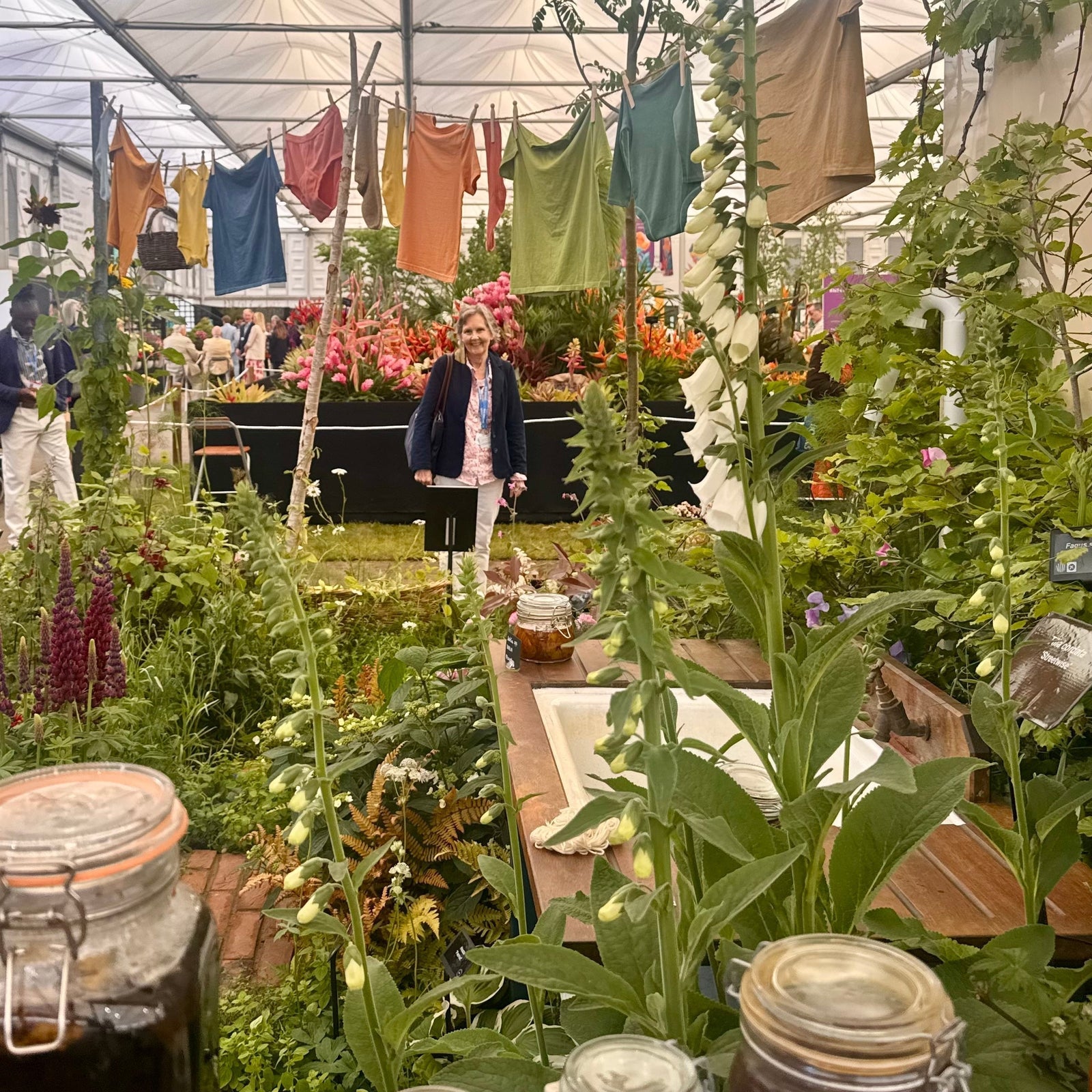
Mum naturally dyed an entire washing line of clothing for the installation, including socks, baby grows, underwear and T-shirts, all dyed with plants. The clothesline was one of the focal points of the garden, suspended above a series of washing stations and planting areas filled with dye plants.

The washing line of naturally dyed clothing, suspended above the planting and washing stations
I spent several weeks weaving stools using Mum's naturally dyed linen yarns. One of the finished stools made it into the final display, tucked amongst the planting alongside an old wooden chair and baskets of naturally dyed textiles. Seeing the weaving sitting amongst living dye plants felt pleasingly full circle.

One of the naturally dyed stool seats woven for Washday Hues, shown alongside the yarn and tools used to make it
The garden itself was extraordinary. At its centre stood a giant washing machine installation created by Cineco, complete with a planted roof, surrounded by natural dye plants, reclaimed washing machine drums used as planters, shelves of solar dye jars, and information boards explaining the relationship between plants, colour and textiles. Some of the information boards had QR codes linking to further resources, including one of our tutorials on dyeing with onion skins.

The giant washing machine at the centre of Washday Hues, planted roof and all, surrounded by the garden's dye plants
During press day, Mum gave a live natural dyeing demonstration with an indigo vat, dyeing a pair of Y-fronts, which generated amusement from passing visitors, sparking some interesting conversations. Thankfully the vat behaved itself, which is never guaranteed with indigo.
People were fascinated by the idea that colour could come from plants growing around them, and many had never considered where colour comes from, or the environmental impact of synthetic dyes.

Mum's indigo dyeing demonstration on the press day, complete with a pair of Y-fronts fresh out of the vat
One of the joys of RHS Chelsea is that you leave inspired aesthetically, but also thinking differently. There were so many gardens this year exploring ecology, sustainability and our relationship with the natural world. A few highlights for us included The Bat Conservation Trust’s ‘Nocturnal Garden’, which explored how planting and habitat design can support biodiversity, and the Tokonoma Garden ‘Sanumaya no Niwa’, which felt beautifully calm amidst the intensity of Chelsea. We also loved the Campaign to Protect Rural England garden ‘On the Edge’ featuring the monumental carved wooden sculpture of Gaia, part of a broader conversation around protecting the British countryside and reconnecting with landscape and stewardship.

The monumental carved wooden Gaia sculpture, one of our favourite sights elsewhere at Chelsea this year
On a slightly random note, I also spent much of the day thinking about pockets. I'd borrowed a brilliant jumpsuit from my friend Helen, made by Wild Clouds, an ethical UK clothing company producing practical, beautifully designed workwear-inspired clothing for women. The pockets were excellent, which matters a great deal when you're a practical bird. I later tagged them on Instagram and was delighted to get an actual human response back. In a world increasingly dominated by automation and faceless brands, those moments of real connection feel important.
A personal highlight of the day for me was meeting Carry Somers, founder of Fashion Revolution and author of The Nature of Fashion. Her work has done so much to challenge the fashion industry around ethics, transparency and sustainability, and it was lovely to chat briefly amongst the crowds about natural dyeing and jumpsuits.

Turns out jumpsuits were a running theme of the day, mine from Wild Clouds, and Carry Somers' made from a recycled kimono
Mostly though, I left feeling incredibly proud of Mum. Natural dyeing is one of those skills that holds together history, horticulture, chemistry, agriculture, textiles and storytelling. Watching visitors engage with her demonstrations, and seeing those naturally dyed clothes hanging across the garden, really reinforced how much this traditional, natural process deserves its comeback.
Huge congratulations again to the entire Sparsholt team on such a thoughtful and ambitious garden. Thank you for inviting us to be part of it, it has been such a privilege.
If you'd like to learn more about natural dyeing, weaving or sustainable textiles, you can explore our online and in-person workshops at Elka Textiles.